Face to Face
Create your own museum experience based on your emotions
TL;DR
Developed for a master’s course at EPFL, this web app reimagines the visitor journey based on emotional responses to art. The experience leverages emotion tracking and behavioral data to create personalized exhibition paths.
-
🎨 Reimagined visitor journey based on emotional responses to art.
-
🔍 Conducted UX research and designed the interface.
-
🤝 Co-led concept development.
-
📈 Leveraged emotion tracking and behavioral data for personalization.
Overview
Context
This prototype was realized for the master course "CS-489 Experience Design" at EPFL. Fascinated by the convergence of technology and design, I pursued an unconventional path during my Computer Science studies. In this course, we developed 'Face to Face', which reimagined museum experiences based on visitor emotions.
Problem
Standard museum visits often follow a rigid, default path that doesn't account for the visitor's internal state. Challenges included:
-
Lack of personalization in the visitor journey;
-
Artworks viewed in isolation without emotional context;
-
Difficulty for visitors to deeply identify with the artist's intent;
-
Static exhibition flows that ignore real-time behavioral data.
Solution
We created a web application that reverses the perspective—the artwork looks at you. The system is designed to:
-
Analyze and record visitor feelings in front of artworks using emotion tracking;
-
Investigate how viewers look at art to map paintings to specific emotional categories;
-
Empower visitors to be 'curators of their own emotions' by generating unique paths based on desired feeling sequences.
My Role
I conducted UX qualitative research, actively participated in ideation and brainstorming sessions, provided assistance with graphic design tasks, and was responsible for designing and developing both the UI and the web application.
Worked With
-
Costanza Volpini (Computer Science student)
-
Licia Tomaselli (Architecture student)
-
Skander Hajri (Computer Science student)
-
Jeffrey Huang (Professor)
-
Immanuel Koh (Teaching assistant)
Timeline
Sep. 2018 – Jan. 2019
Tools
HTML5, CSS3, JavaScript, Machine Learning APIs
Process
Research & Journey Mapping
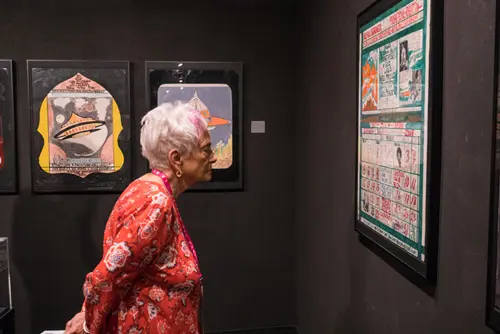
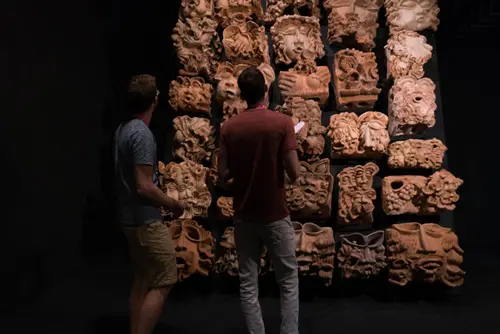
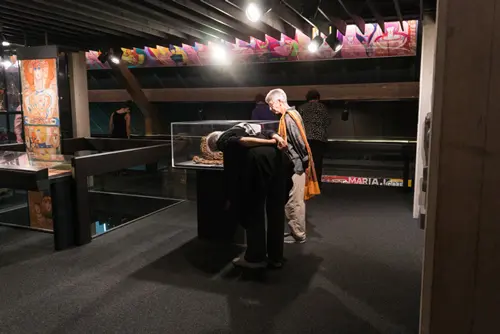
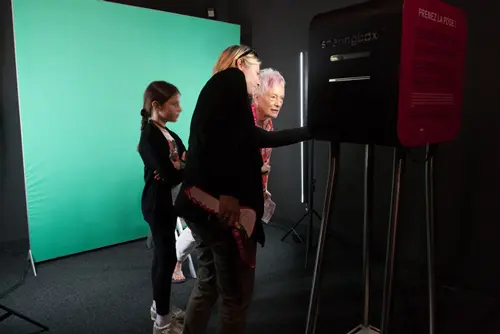
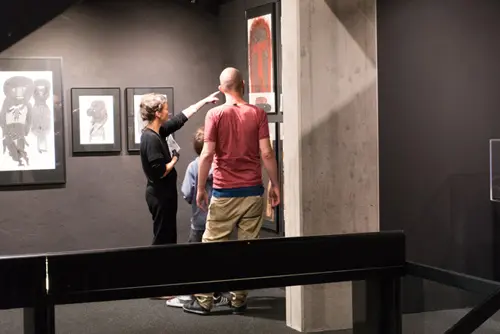
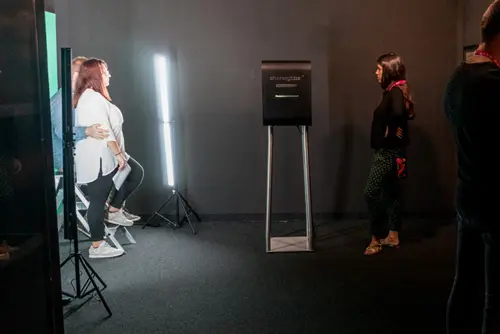
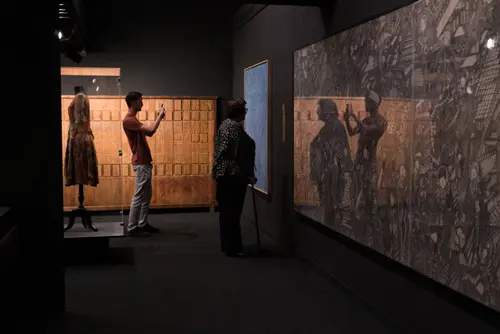
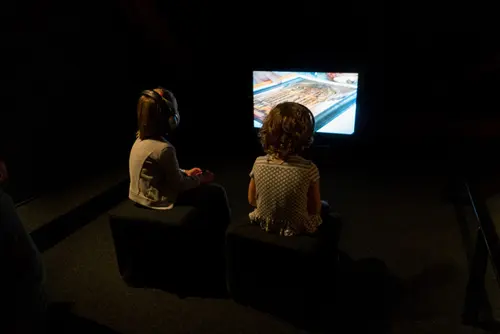
We visited a museum in Lausanne to document user behavioral flows. We recorded audience types, tracked their paths, and observed their emotional expressions at the 'Collection de l'Art Brut'.
Our Manifesto
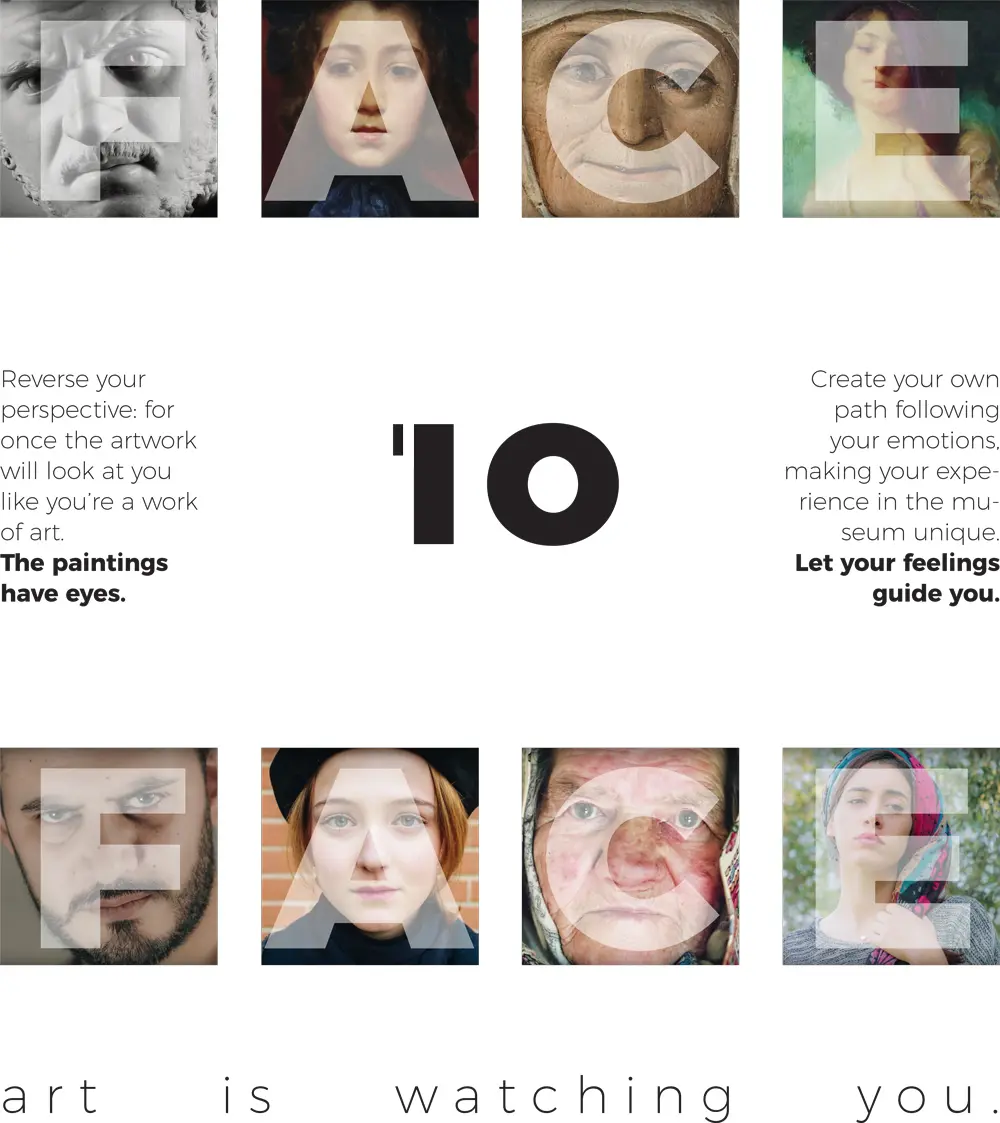
Documenting the visitor journey allowed us to identify emotions as the primary driver of the museum experience. We translated these insights into a project manifesto that challenges the status quo, turning the observer into the observed and making every visit a unique emotional "Feeling Path".
Methodology
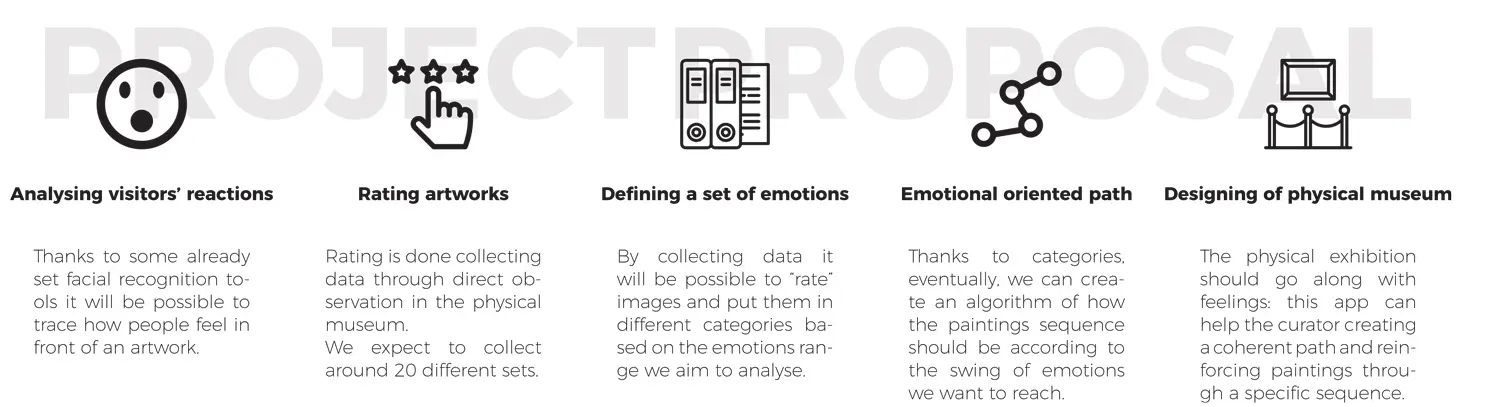
The project followed a three-step flow: 1) Journey Mapping (observe/record), 2) Journey Analytics (analyze), and 3) Journey Modelling (design). We focused on understanding how art evokes specific sequences of feelings.
Low-Fidelity Prototype
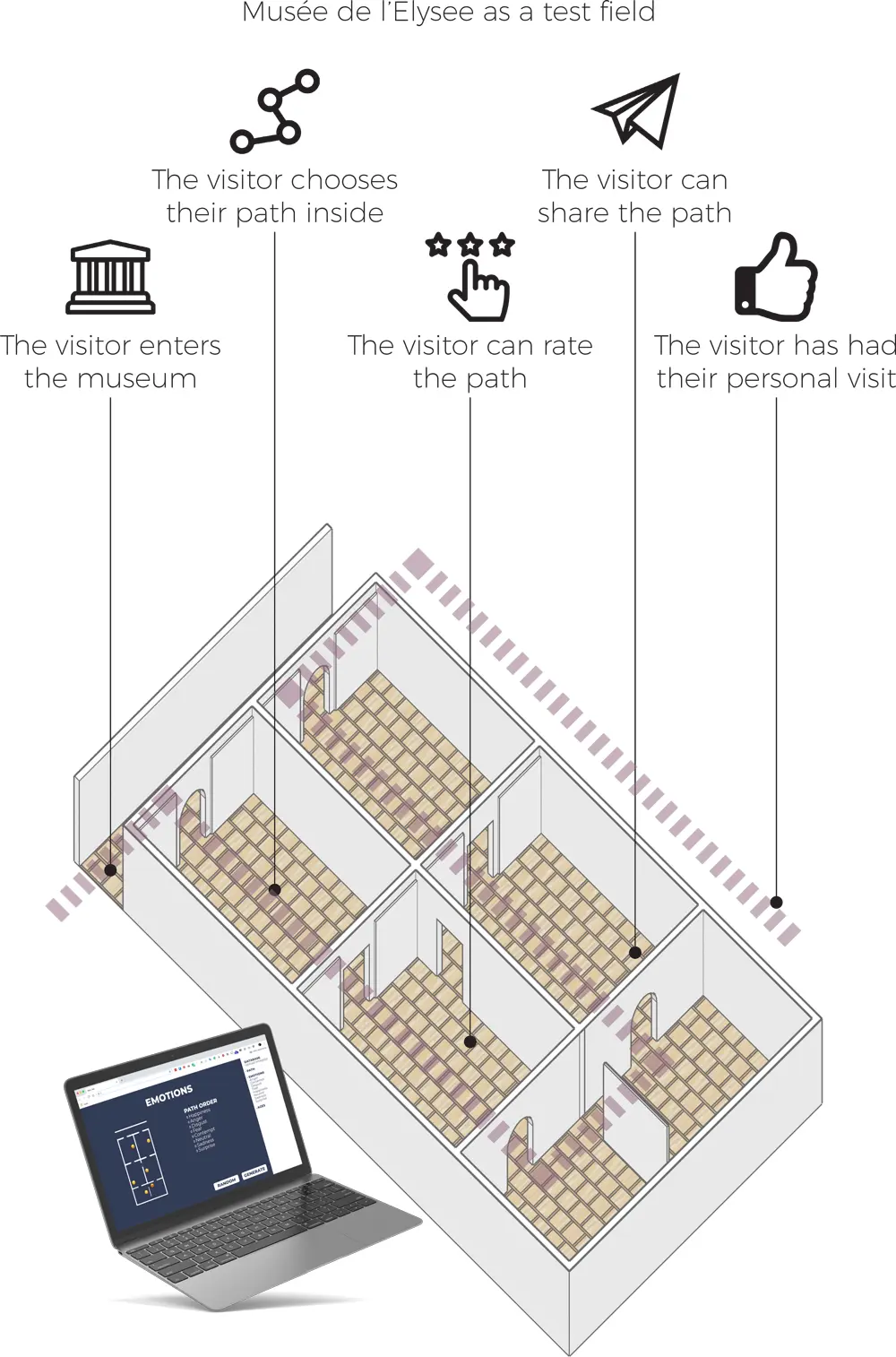
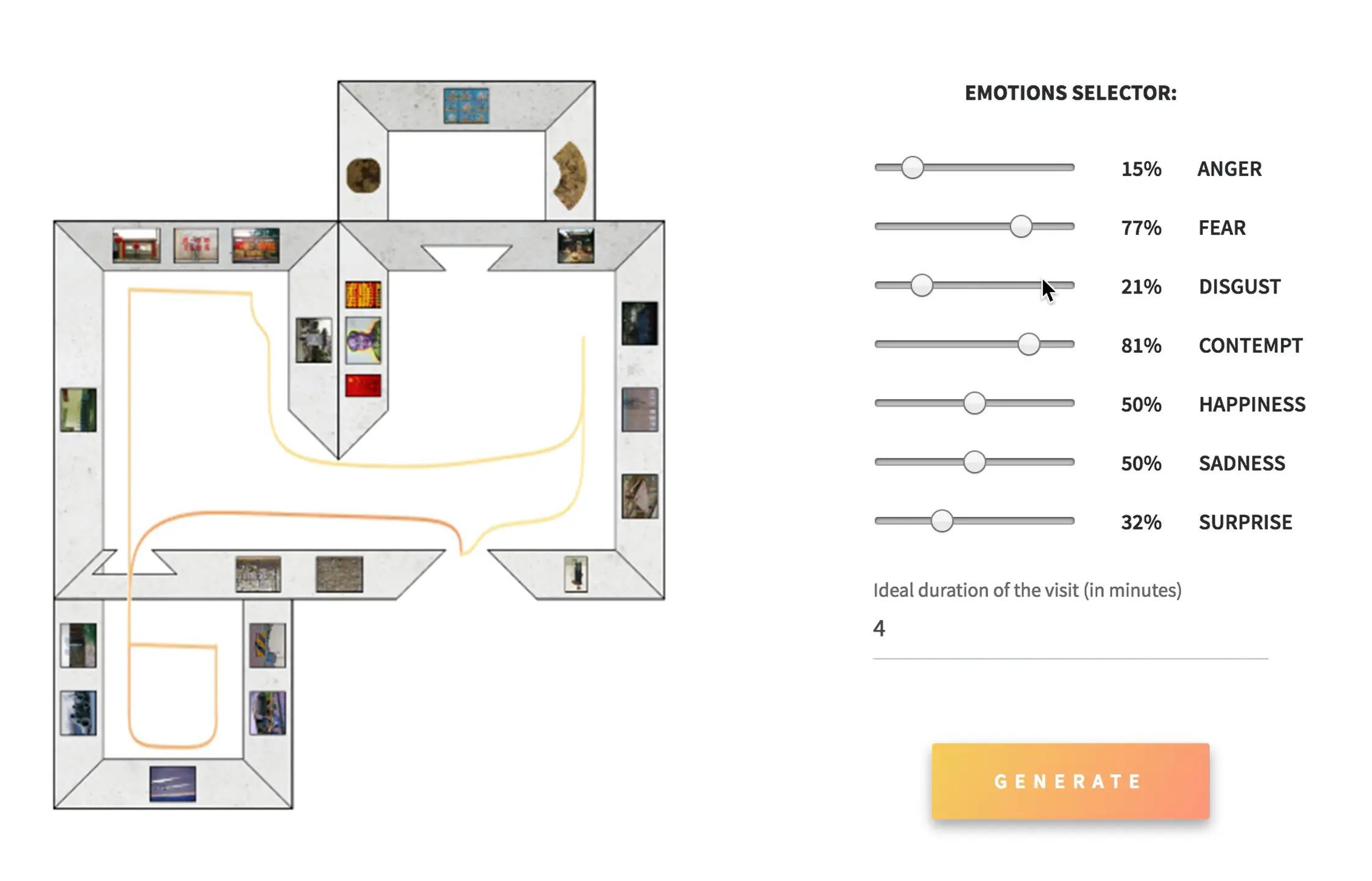
The idea of the "Feeling Path" is that one user can get a different way of progressing through the exhibition by balancing the weights of a set of emotions and setting the total time of the visit.
The Experiment
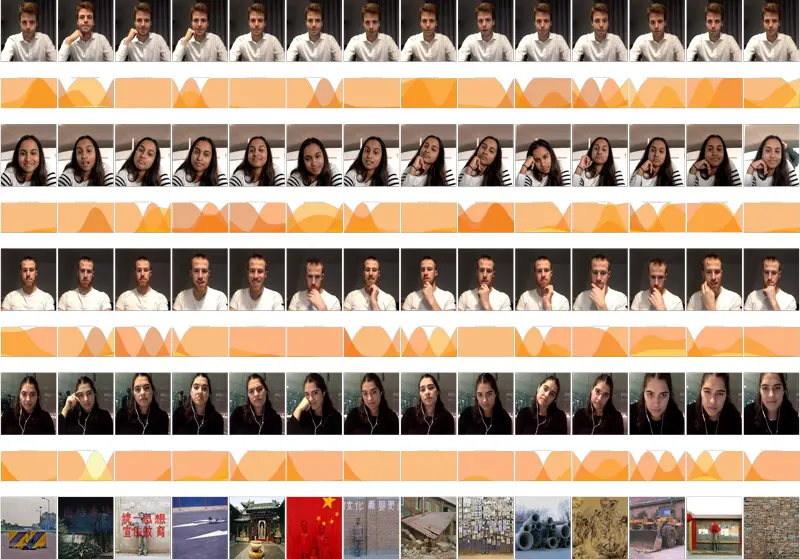
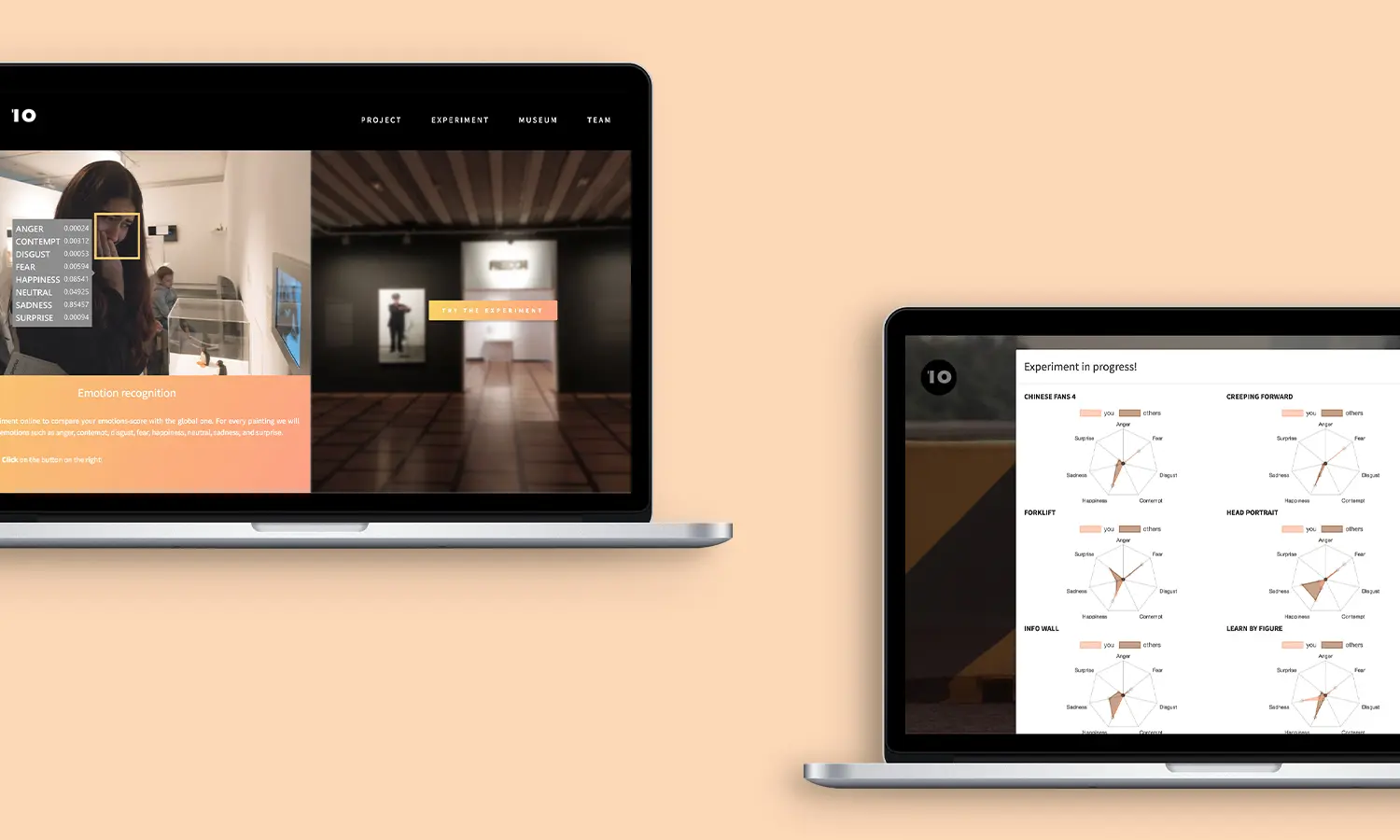
We built a website to record user emotions in front of a random sequence of paintings. We captured images of the user every 1.5 seconds to analyze the evolution of feelings. This allowed us to collect enough data to map artworks to specific categories like happiness or anger.
Data Analysis
Emotions and PCA
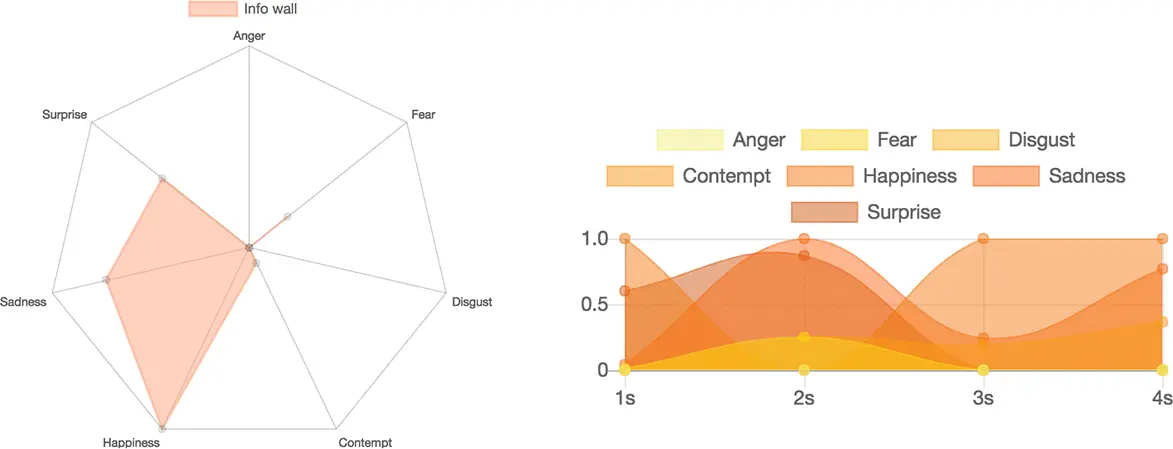
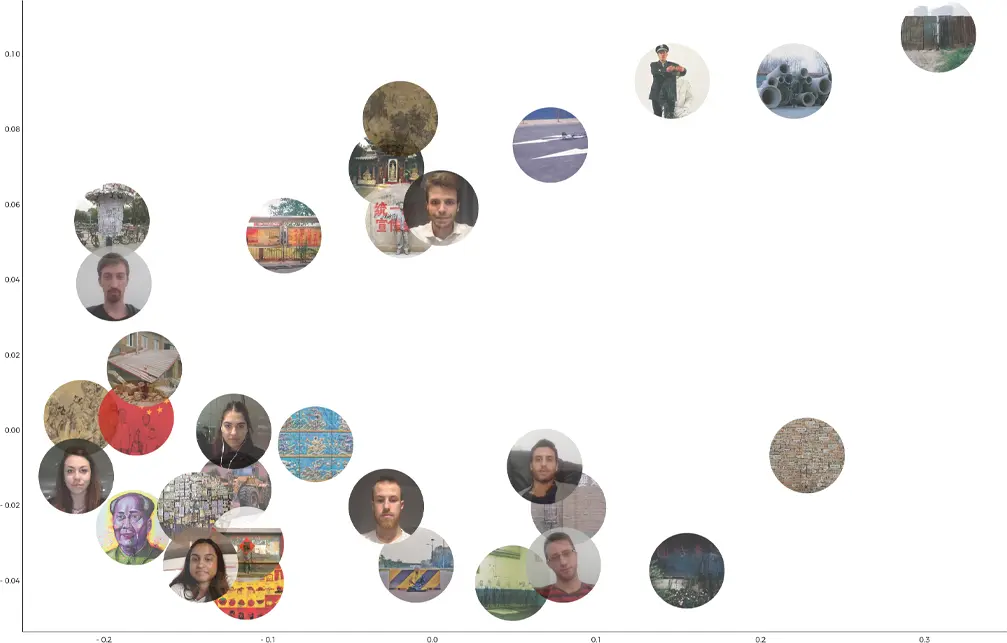
We analyzed the average distribution and evolution of feelings over time. Using Principal Component Analysis (PCA), we discovered that some visitors' emotional profiles almost entirely overlay with specific artworks, showing a deep emotional similarity.
Design & Web App
We developed a low-fidelity prototype where users balance the weights of different emotions and set a total visit time. The final web application translates these inputs into a personalized "Feeling Path".
Outcomes
Learnings
This project allowed me to explore the intersection of computer science and human emotion. It challenged me to translate qualitative emotional data into a quantitative algorithm that could generate a meaningful user experience. It was my first major step into the world of Experience Design.